Fans today
may not realize how lucky they are in terms of the coverage provided about
teams and players compared to the way things used to be. Social media has
brought about a tremendous amount of change in the world of sports journalism, and
luckily for the fans, but maybe unluckily for players, there will be no going
back.

Players are more accessible than ever to journalists and fans
Most
professional athletes are on Twitter. Sports fans are particularly obsessed with
their teams players in a way fans of other types entertainment industries just aren’t.
Fans always want the most information about their favorite players, to keep up
with how a player’s actions may affect the play of the team, but mainly because
fans want to feel like part of the team. Fans of musicians don’t come home from
a concert of their favorite band saying, “We put on a really good show tonight!”
Sports fans always come home from a game commenting about how “We played a
great game tonight.” The idea that fans are a part of the team may seem odd to
some, but I think it explains why athletes have taken to Twitter the way they
have. Athletes clearly like having fans, and a Twitter account allows for as
many fans as possible to see what they have to say.
Twitter's general negative attitude carries through to athletes as well

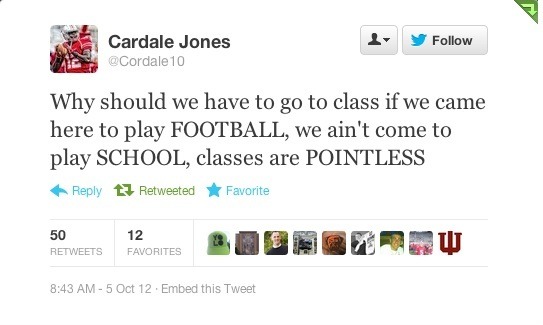
Twitter is regarded by most as one or two things: a good source of news in a world where breaking news is constant and not day to day, or a social media site that includes lots of angry 140 character rants. Athletes are not exempt from the latter idea at all. Perhaps one of the most famous incidents came from last year and the Redskins receiver Jabar Gaffney. As you can see in the edited image to the left, Gaffney went off with tweets about problems with his wife. There is obviously no advantage what so ever to posting about that type of event on Twitter for an athlete. It can only cause the media to point out what a knucklehead he was being, or for other Twitter users to ridicule him after he posted it. This is what happens every single time an athlete posts something controversial. Media over sensationalizes tweets and fans react harshly on Twitter. For some reason, athletes don’t seem to understand this, and continue to cause trouble for themselves by posting inappropriate things on twitter. Cardale Jones posted the following tweet during football season.
Athletes need to learn the right way to use social media
Athletes need to understand
that tweets cannot be permanently erased, and that they will assume responsibility
for every single tweet they send out. I know as a fan that Twitter is a greatly
appreciated medium for fans because of all the extra content we can get about
our favorite athletes, but in order for Twitter to not destroy an athlete’s reputation,
they need to learn to limit they content they post.

No comments:
Post a Comment